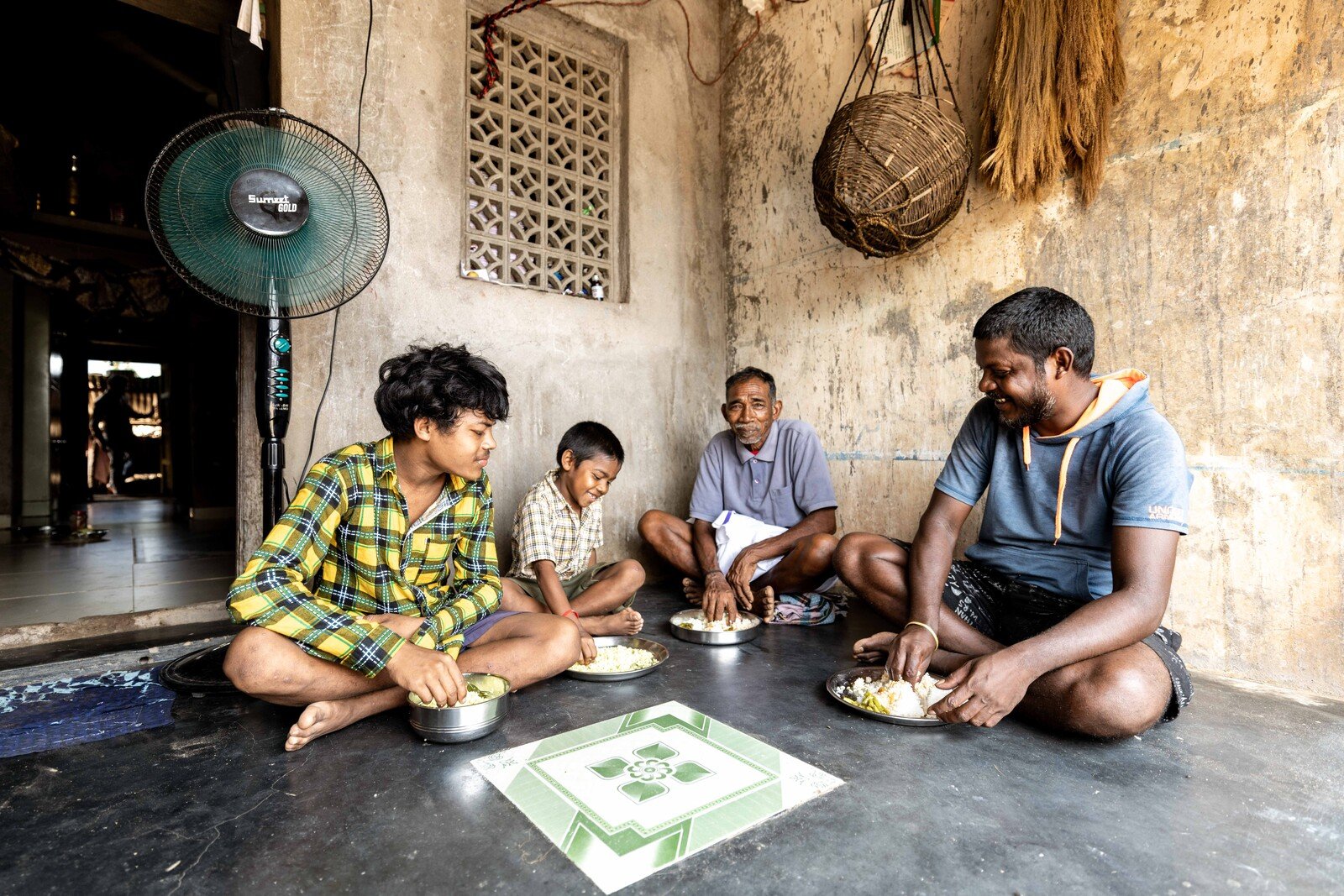




Appa Rao, from Andhra Pradesh, now lives peacefully with his daughter Sayamma, son-in-law Chendu, and his grandchildren Ganesh, Mahesh, Lalitha and Lokesh. This quiet life comes after 22 years of bonded labour on a farm in Tamil Nadu.
How Appa Rao Went Missing
In 2003, Appa Rao heard about a job at a paper company in Pondicherry that promised a monthly salary of ₹5,000. At the time, he worked on an agricultural farm and earned barely enough to survive. He wanted to give his married daughter some money and buy her a nose pin. ‘I have only one daughter. I wanted to buy something for her,’ he said.
With this hope, Appa Rao left home one night to join a group of labourers travelling to Pondicherry. With no proper roads, he walked 15 km to Vizianagaram district and took a train to Visakhapatnam, then another towards Pondicherry.
Along the way, he got separated from the group of labourers travelling with him. He missed a connecting train and ended up in Sivagangai district, Tamil Nadu. He was asked to get off because he didn’t have the right ticket. Lost, alone and unable to speak Tamil, Appa Rao asked people how to return home, but no one helped.
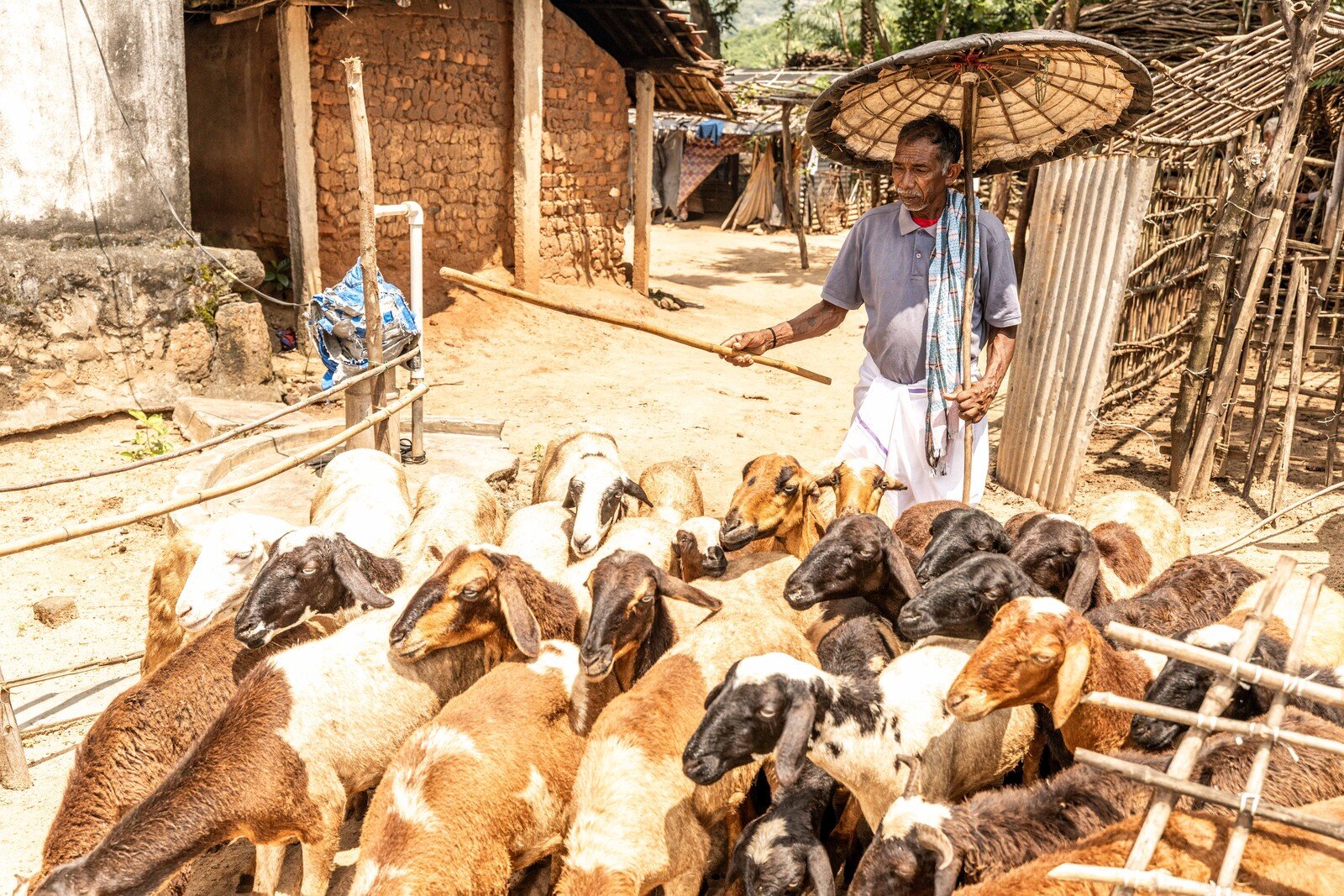
Near the railway station, a man offered him food and shelter. After a week, the man offered him work on his farm—agricultural labour in the morning and shepherding in the afternoon—with a promise of ₹50,000 after one year. With no money and no way home, Appa Rao agreed, believing it was temporary.
That decision changed his life.
Two Decades of Exploitation
Appa Rao worked every day from 6am to 10pm. He dug irrigation pits, cultivated crops, and later grazed sheep for long hours. Meals were basic and limited. After a year, when he asked for his wages, the owner said the money was being ‘saved’ for him.
Other shepherds warned Appa Rao that he was being cheated. They told him he would never be paid and would die there. They advised him to complain to officials. But Appa Rao didn’t know the language or the place. Each time he asked to go home, the owner coerced him into staying.
Whenever Appa Rao fell sick, he was given quick treatment and forced back to work. There was no violence, but years of manipulation and false hope kept him trapped. What he believed was a one-year job stretched into 22 years of bonded labour.
A Family Left Behind
Back home, Appa Rao’s family received word that he was last seen at a railway station. At first, they thought he would return in a few days, but he didn’t. Even with their limited resources, they spared no effort in trying to find him.
His son-in-law Chendu and other relatives searched for him in and around their village for more than a month but found no trace of him. Grieved by her husband’s sudden disappearance, Seethamma stopped eating, and within three months, she passed away. The family eventually accepted that Appa Rao might never return.
‘I thought he had died,’ Sayamma recalled.
Steps Towards Freedom
In January 2025, during bonded labour inspections in Sivagangai district, the Assistant Commissioner of Labour received information about an elderly man who had worked for years without pay and could not return home. Officials visited the site on 31 January 2025 and found Appa Rao.
Despite language barriers, his situation was clear. While the Revenue Divisional Officer initially hesitated, the district collector directed a detailed enquiry. Appa Rao was identified as a bonded labour survivor.
On 1 February 2025, the farm owner was arrested, and an FIR was filed. Appa Rao was moved briefly to a shelter run by IRCDS and later to an elderly care home while officials searched for his family.
Reunited After 22 Years
Media coverage helped spread the word across Tamil Nadu and Andhra Pradesh. Survivor networks and officials worked together to trace Appa Rao’s family. In March 2025, Chendu saw a BBC video about Appa Rao. Sayamma immediately recognised her father. Andhra Pradesh officials arranged travel for the family to Tamil Nadu.
After three days, Appa Rao and his family were reunited. He asked about Seethamma, his wife as soon as he reached his village; his family gave him some time to settle down before breaking the sad news to him. Appa Rao was heartbroken when he learnt that while he was in captivity, Seethamma had waited desperately for him for months before giving up her life.
Officials opened a bank account for him and deposited ₹3,00,000 from government funds. He also received his Release Certificate and remains eligible for further rehabilitation support.
Life in Freedom
Appa Rao is quiet and reserved and loves playing with his youngest grandchild, Lokesh. ‘It is good to have an elder in the house now. We eat together—that’s the best time,’ Sayamma said.
‘I thought I would die there. Now I am here with everyone,’ Appa Rao shared. ‘No one should live the life I lived.’